What is a load test?
Nowadays, application performance is a critical aspect of ensuring a system's usability.
Imagine launching a new feature or product, only for your system to crash due to the amount of traffic it receives.
This type of situation can create a negative impression of your system and even frustrate users, causing you to lose countless opportunities with those customers.
This is where load testing comes in. Let's understand what load testing is…
In Detail
By simulating different usage loads on a system, load testing helps identify potential bottlenecks before they occur in production.
This approach ensures that your system efficiently handles task execution even under high demand.
To simulate production environment scenarios effectively, load tests are divided into different types, each focusing on a specific load and duration. Let's explore…
Types of Load Tests
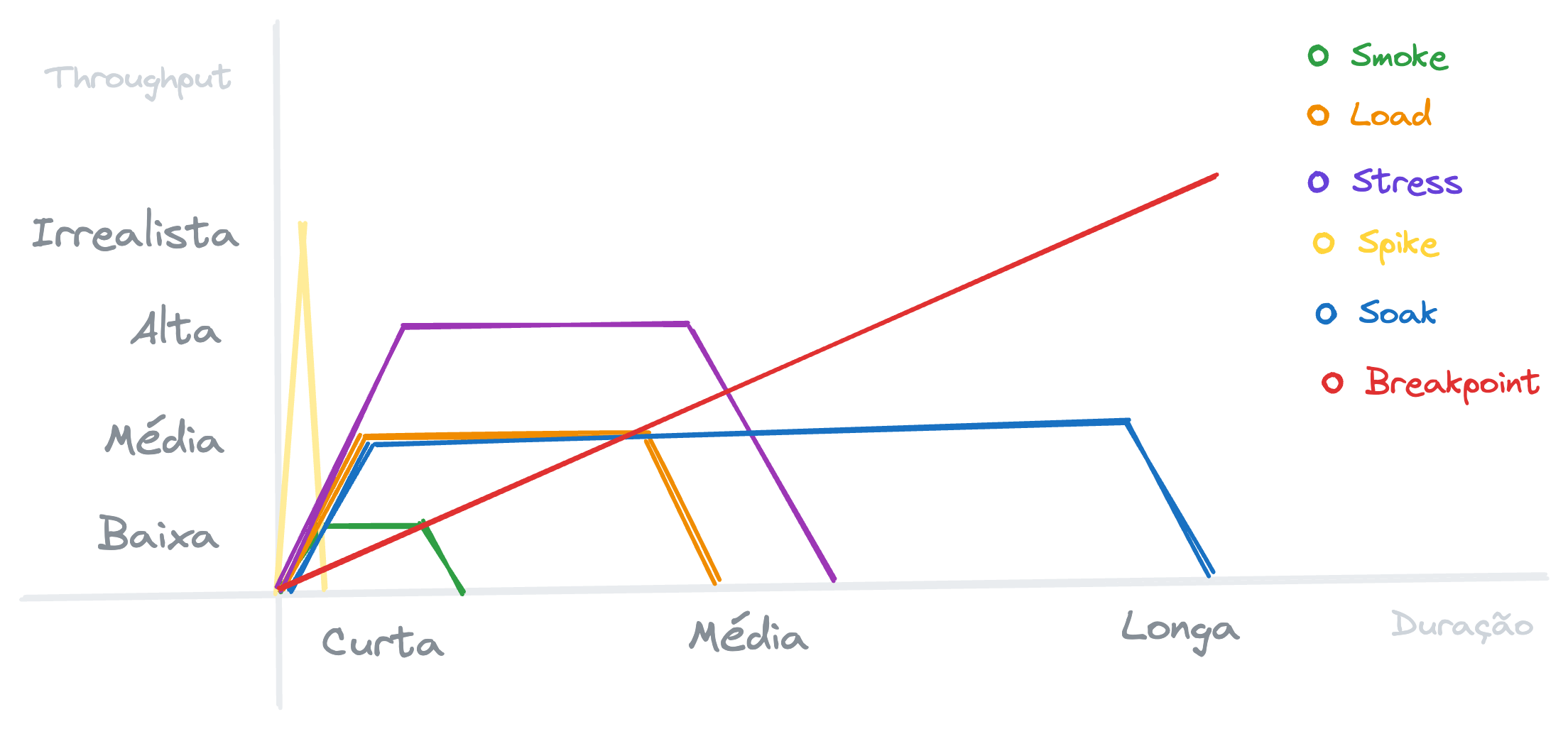
The following list presents the six most common types of load tests and their objectives:
-
Smoke Test
This test's main goal is to ensure that the application can handle a light load of requests.
It is typically used as a pre-test for other types of load tests.
-
Load Test
In summary, this test's main goal is to ensure that the application can withstand the system's average usage load.
This test usually lasts approximately 5 to 10 minutes.
-
Stress Test
It checks the system's functionality under a load higher than the expected average; its duration is similar to the Load Test.
-
Spike Test
Its main goal is to understand how the system behaves with a high request rate over a short period, testing volumes far above the expected average in just a few seconds.
-
Soak Test
The main idea here is to identify potential memory leaks or performance issues, so the test runs for an extended period under a medium usage load.
-
Breakpoint Test
Its primary objective is to determine the maximum load at which the system fails (break point).
Unlike the others, it doesn't have a specific load; the idea is to gradually increase the system's load until it begins to fail.
Moral of the Story
As you can see, proactive actions can identify problems before they occur in production, ensuring that bottlenecks are addressed and load management strategies are implemented to ensure the best system usability.
I hope you enjoyed the reading, and see you soon! 👋