Advantages of the trailing comma in multiline expressions
In Java, the trailing comma in a multiline expression can be used in:
- Arrays
final String[] heroes = {
	"Batman",
	"Wonder Woman",
	"Deadpool", /* <-- Here! */
};
- Enums
public enum Role {
	MANAGER,
	REVIEWER,
	SUBSCRIBER, /* <-- Here! */
}
You may have encountered this approach before, but have you ever wondered why it is used?
While it might seem like a minor detail, this practice can improve code readability, maintainability, and organization.
In this article, I intend to explain why a trailing comma in multiline expressions is more than just a style convention — it’s a practice that can enhance your code quality.
In Detail
Here are some reasons why you might want to adopt this practice:
1. Easier Modifications
By placing a comma at the end of each line, you simplify adding or removing items.
You can make changes without adjusting the last line, which can reduce formatting errors.
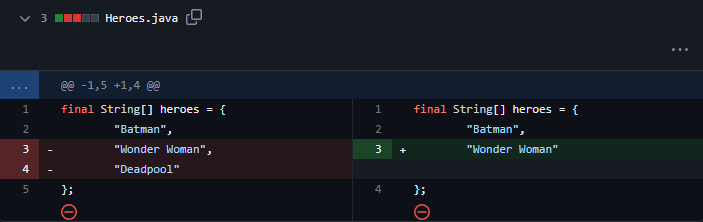
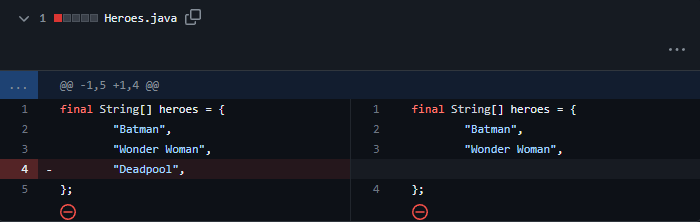
Below is a comparison of the changes needed when removing the last item from a list.
Without a Comma
Notice how line 3 had to be modified when removing line 4:
With a Comma
Here, only one line was modified:
2. Cleaner Diffs in Version Control
In version control systems like Git, cleaner diffs can be generated when you add or remove lines in multiline expressions, as the change is limited to the line that was modified, without affecting previous lines.
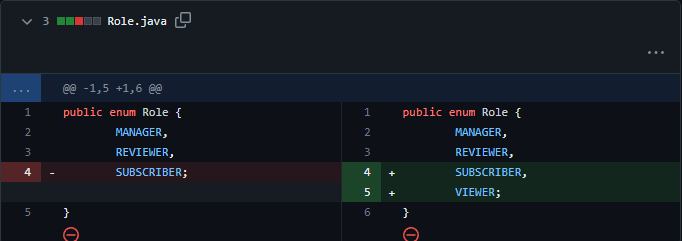
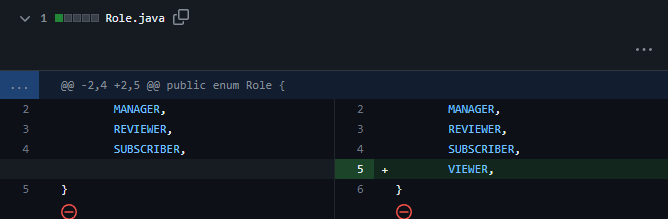
Below is a comparison of the diff generated when adding a new element to the end of an enum:
Without a Comma
In this example, multiple lines appear in the diff:
With a Comma
Here, only one line appears in the diff:
Moral of the Story
It’s important to note that a trailing comma in multiline expressions is not strictly required by the Java compiler.
So, if the mentioned benefits do not seem valuable to you or your team, you are not obligated to use them.
Personally, if I’m working with code that might be frequently modified, I always opt for the trailing comma approach due to the benefit described in “Cleaner Diffs in Version Control.”
Go Deeper
I decided to write about this topic because I was recently asked about this approach. When I searched for Java-related materials mentioning these benefits, I couldn’t find any texts in Portuguese on the subject.
Below are some of the references I used: