How to use circuit breaker to make your service more resilient
The Circuit Breaker pattern in microservices architecture enables an application to remain operational and avoid cascading failures when facing communication issues with remote calls.
Overview
This pattern uses the concept of a circuit breaker in an electrical circuit to address communication issues in a distributed system.
Similar to the component in our homes that prevents other electrical components from burning out when a failure is detected,
the Circuit Breaker monitors service-to-service calls, and upon detecting anomalies, it halts future calls, preventing system overloads and cascading failures to other services.
Details
Before we dive in, let’s define some key terms:
- Circuit Breaker: The component responsible for monitoring and managing remote calls in an application.
- Circuit: Refers to the integration between the application and the remote service.
Circuit States
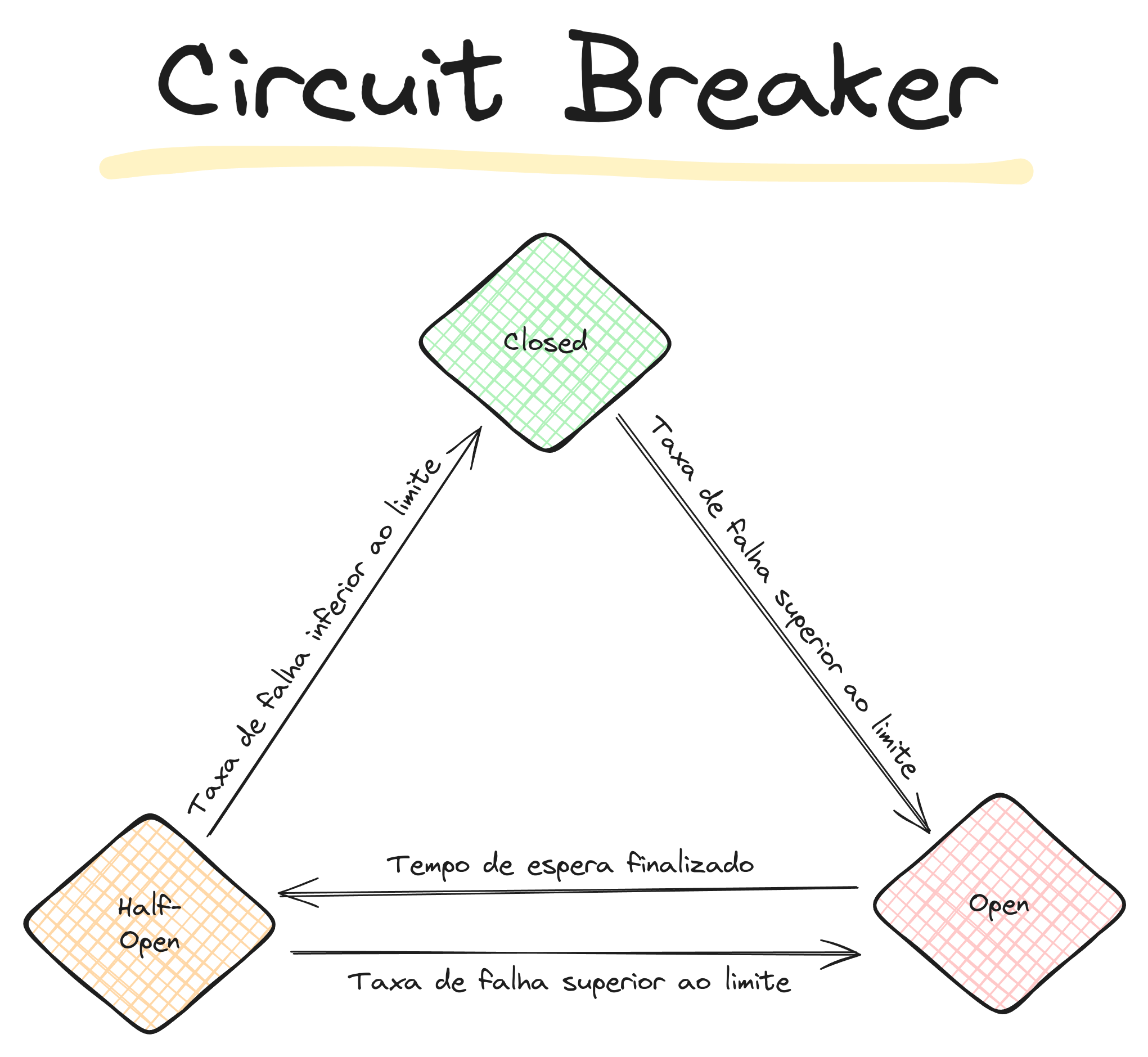
The Circuit Breaker manages the behavior of a circuit through its three possible states:
Closed

In this state, the system operates normally, allowing communication between services.
Here, the assumption is that applications are healthy, and only the error rate and latency of requests are monitored.
If the error rate or latency exceeds the desired thresholds, the circuit breaker opens the circuit, changing the state to Open.
Open

In this state, the Circuit Breaker has detected a failure in the monitored integration and has opened the circuit, temporarily halting requests.
When the circuit is open, it prevents requests from being sent to the failing service, which can help avoid overloading the service and cascading failures to its clients.
During this state, the Circuit Breaker typically enters a timeout period, waiting for a predefined time for the remote service to stabilize. After this period, the circuit breaker transitions the state to Half-Open.
Half-Open
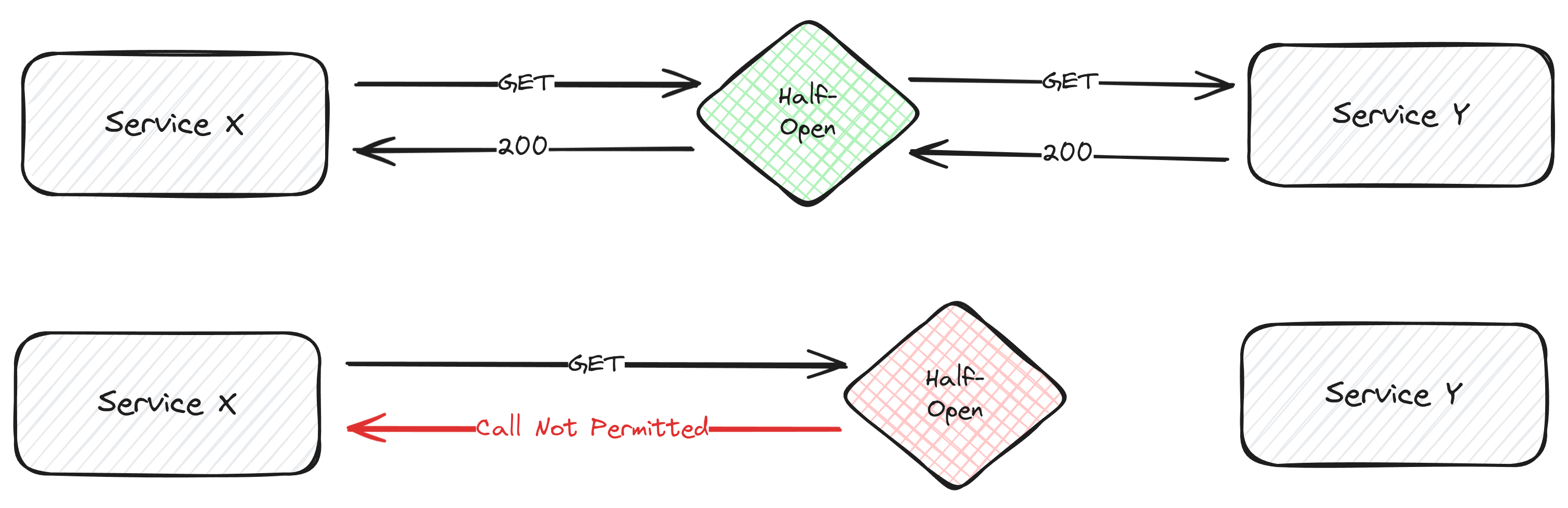
In this state, the system checks whether calls can resume normally. When a circuit is Half-Open, a limited number of requests are allowed to the external service to verify if it has recovered.
After some requests, the error rate and/or response time are checked again. If the issues persist, the circuit returns to Open and goes through another timeout period. If the problem is resolved, the circuit switches back to Closed.
Types of Circuit Breaker
There are two possible types of Circuit Breakers, which define how the transitions between Closed and Open states are determined:
- Count Based: The circuit state changes from Closed to Open if the last N requests exceed the failure rate or response time limit.
- Time Based: The circuit state changes from Closed to Open if the requests made in the last N seconds exceed the failure rate or response time limit.
Hands-On
“Talk is cheap. Show me the code” — Linus Torvalds
In this text, I will demonstrate how to implement and configure the Circuit Breaker pattern using the Resilience4J library alongside the Spring framework (Java / Kotlin).
1. Installing Resilience4J
Add the dependency to your project’s configuration file as shown below:
- Gradle (build.gradle)
implementation 'org.springframework.cloud:spring-cloud-starter-circuitbreaker-resilience4j'
- Maven (pom.xml)
<dependency>
    <groupId>org.springframework.cloud</groupId>
    <artifactId>spring-cloud-starter-circuitbreaker-resilience4j</artifactId>
</dependency>
2. Understanding Configurations
After installing Resilience4J, let’s begin by understanding the main configuration options before adding any code to our project.
resilience4j:
  circuitbreaker:
    instances:
      YOUR_CIRCUIT_BREAKER_NAME:
        sliding-window-type: COUNT_BASED
        sliding-window-size: 100
        failure-rate-threshold: 80
        slow-call-rate-threshold: 100
        slow-call-duration-threshold: 30000 # milliseconds
        minimum-number-of-calls: 10
        permitted-number-of-calls-in-half-open-state: 10
        max-wait-duration-in-half-open-state: 0s
        wait-duration-in-open-state: 60s
        automatic-transition-from-open-to-half-open-enabled: false
        ignore-exceptions:
          - feign.FeignException.NotFound
          - feign.FeignException.Conflict
To configure your Circuit Breaker, add properties under resilience4j.circuitbreaker.instances.YOUR_CIRCUIT_BREAKER_NAME.
Explanation of Configurations
sliding-window-type: Defines the type of Circuit Breaker to use. Options: COUNT_BASED or TIME_BASED.sliding-window-size: Defines the size of N for the chosen Circuit Breaker type.failure-rate-threshold: Maximum error rate for the circuit to remain in the Closed state.slow-call-rate-threshold: Maximum rate of slow calls for the circuit to remain in the Closed state.slow-call-duration-threshold: Time (in milliseconds) to define whether a call is considered slow.minimum-number-of-calls: Minimum number of calls required to start calculating error and slow call rates.permitted-number-of-calls-in-half-open-state: Number of allowed calls in the Half-Open state.max-wait-duration-in-half-open-state: Maximum wait time (without calls) in the Half-Open state before transitioning to Closed. If set to0s, the transition occurs only after a call.wait-duration-in-open-state: Wait time in the Open state before transitioning to Half-Open.automatic-transition-from-open-to-half-open-enabled: Automatically transitions the Circuit Breaker from Open to Half-Open after the wait time. If set tofalse, the transition occurs only after a call. Note: Enabling this creates a new thread to manage the state.ignore-exceptions: List of exceptions that should not be considered failures when calculating the error rate.
3. Coding
To make everything work, go to the class where you want to use the Circuit Breaker and add the @CircuitBreaker annotation. See the example below:
import io.github.resilience4j.circuitbreaker.annotation.CircuitBreaker;
import lombok.RequiredArgsConstructor;
import org.springframework.stereotype.Service;

@Service
@RequiredArgsConstructor
public class MyService {
    private final MyClient myClient;

    @CircuitBreaker(name = "my-circuit-breaker")
    public String doSomething() {
        return myClient.doSomething();
    }
}
From now on, when calling this method, if the circuit is in the Open state, a CallNotPermittedException will be thrown.
To add a fallback behavior for open state scenarios, make the following changes:
import io.github.resilience4j.circuitbreaker.CallNotPermittedException;
import io.github.resilience4j.circuitbreaker.annotation.CircuitBreaker;
import lombok.RequiredArgsConstructor;
import org.springframework.stereotype.Service;

@Service
@RequiredArgsConstructor
public class MyService {
    private final MyClient myClient;

    @CircuitBreaker(name = "my-circuit-breaker", fallbackMethod = "doSomethingFallback")
    public String doSomething() {
        return myClient.doSomething();
    }

    protected String doSomethingFallback(final CallNotPermittedException exception) {
        return "fallback";
    }
}
For more examples, check this repository.
The Moral of the Story
In summary, we have learned that adding a Circuit Breaker pattern to your application can significantly increase your system's resilience by handling errors and preventing cascading failures.
It is important to note that such patterns increase the complexity of your code and project, so use them wisely and only when necessary.
Thank you for reading! 👋